Institutional Insights: Credit Agricole FX Weekly 13/3/26

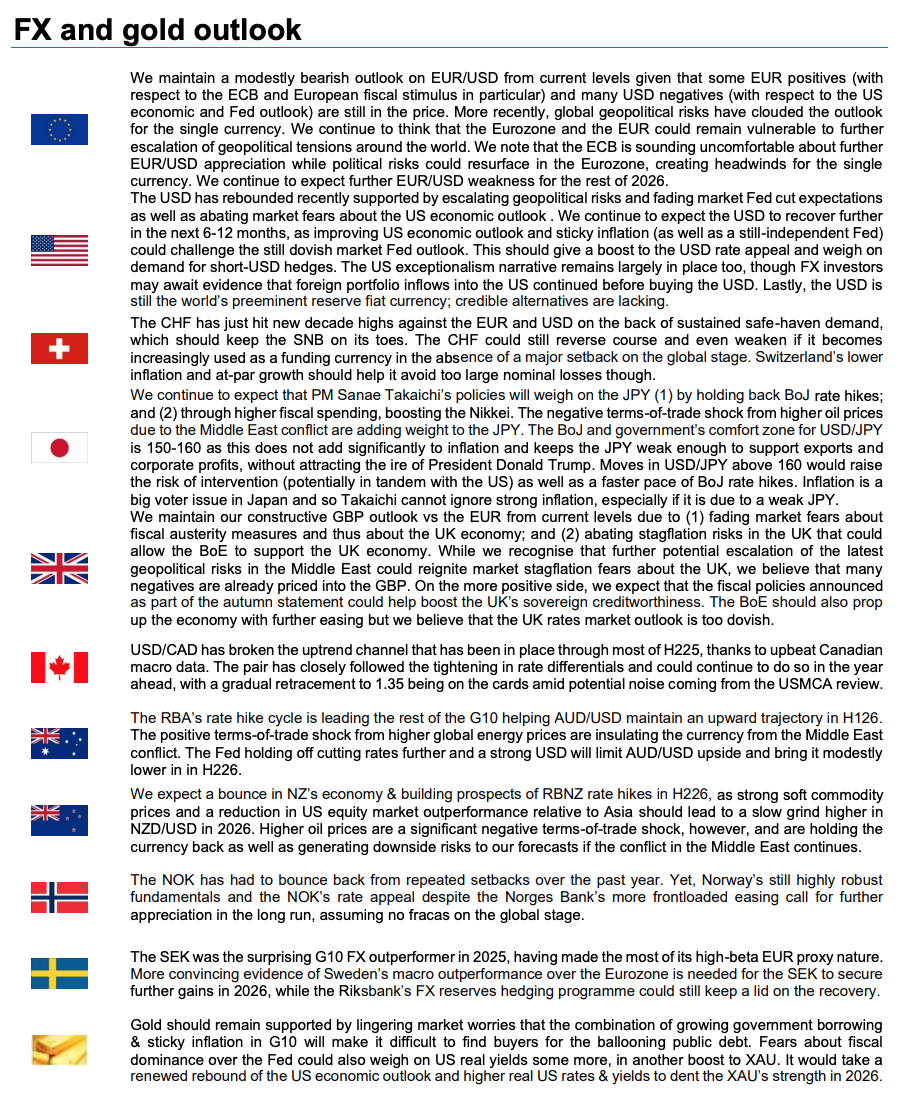
The ongoing conflict in Iran continues to exert upward pressure on global energy prices, keeping them near multi-year highs. This persistent geopolitical uncertainty has heightened risk aversion, providing a boost to the safe-haven US dollar (USD). Looking ahead, eight central bank meetings scheduled for next week are likely to address the potential inflationary risks posed by the recent surge in oil prices, which may outweigh concerns about slowing economic growth. A tightening of global financial conditions could further amplify risk aversion.
The Federal Reserve (Fed) is expected to maintain its current policy rates in March. The recent surge in oil prices may have minimized the extent of dovish dissent within the Federal Open Market Committee (FOMC). Markets will closely watch the updated Fed dot plot, forward guidance, and economic projections, which could suggest that the oil price rally might delay inflation's return to target levels. This would reinforce the Fed’s data-dependent policy approach and potentially strengthen the USD as dovish market expectations are scaled back.
The European Central Bank (ECB) is also expected to keep rates steady while acknowledging the uncertainty introduced by rising energy prices. However, the ECB is unlikely to endorse current market expectations of imminent policy tightening. Similarly, the Bank of England (BoE) may signal its willingness to cut rates despite the inflationary pressures from higher energy prices. If the ECB and BoE fail to meet hawkish market expectations, the euro (EUR) and British pound (GBP) could face challenges.
The Reserve Bank of Australia (RBA) is unlikely to overlook the inflationary impact of higher oil prices, given that inflation is already above target, the economy is expanding beyond its potential, and inflation expectations are rising. As a result, the RBA is expected to raise its cash rate by 25 basis points next week. Meanwhile, the Bank of Japan (BoJ) is expected to hold rates steady but may signal increased vigilance regarding the inflationary risks posed by a weak Japanese yen (JPY) and elevated energy prices. Japanese officials have expressed concerns about the yen's depreciation, and direct intervention might become necessary to prevent further weakness, particularly around the timing of the BoJ and Fed meetings.
For the Swiss National Bank (SNB), the focus will likely remain on the strength of the Swiss franc (CHF). The SNB may emphasize the potential for foreign exchange market intervention if high valuations persist. On the other hand, the Bank of Canada (BoC) and Sweden’s Riksbank are expected to adopt a wait-and-see approach, especially as the latter was preparing to address near-1% inflation stemming from upcoming VAT cuts before the recent energy price shock.
Disclaimer: The material provided is for information purposes only and should not be considered as investment advice. The views, information, or opinions expressed in the text belong solely to the author, and not to the author’s employer, organization, committee or other group or individual or company.
Past performance is not indicative of future results.
High Risk Warning: CFDs are complex instruments and come with a high risk of losing money rapidly due to leverage. 71% and 74% of retail investor accounts lose money when trading CFDs with Tickmill UK Ltd and Tickmill Europe Ltd respectively. You should consider whether you understand how CFDs work and whether you can afford to take the high risk of losing your money.
Futures and Options: Trading futures and options on margin carries a high degree of risk and may result in losses exceeding your initial investment. These products are not suitable for all investors. Ensure you fully understand the risks and take appropriate care to manage your risk.
Patrick has been involved in the financial markets for well over a decade as a self-educated professional trader and money manager. Flitting between the roles of market commentator, analyst and mentor, Patrick has improved the technical skills and psychological stance of literally hundreds of traders – coaching them to become savvy market operators!